Decades of diplomatic ambiguity surrounding Israel’s undeclared nuclear arsenal have created a perilous blind spot for global security, particularly as regional tensions escalate and the potential for existential threats looms larger. While officially maintaining a policy of "nuclear opacity" – neither confirming nor denying the existence of its weapons – security experts widely acknowledge that Israel possesses a substantial nuclear capability, estimated by institutions like the Stockholm International Peace Research Institute (SIPRI) to include approximately 80 nuclear warheads and diverse delivery systems. This long-standing posture of secrecy has allowed the international community to sidestep a critical question: under what circumstances might Israel deploy these weapons?
The Doctrine of Opacity and Existential Threats
Israel’s approach to nuclear weapons diverges significantly from the established doctrines of most nuclear-armed states. Rather than centering on deterrence against peer nuclear powers or strategic competition, Israel’s security calculus has historically been deeply rooted in the fear of an existential threat – the possibility of national annihilation should a conflict turn decisively against it. This mindset, honed through numerous regional wars, from the Six-Day War of 1967 to the Yom Kippur War of 1973 and contemporary confrontations with Iran and militant groups in Gaza and Lebanon, shapes its strategic thinking.
The concept often referred to in strategic literature as the "Samson Option" reflects this deep-seated concern. While not officially codified, the underlying logic suggests a potential willingness to resort to nuclear weapons if the state perceives its very survival to be at stake, particularly in the face of overwhelming conventional defeat. This contrasts with conventional nuclear doctrines, which typically erect extraordinarily high thresholds for the use of atomic weapons, primarily reserved for deterring nuclear aggression.
Escalating Regional Tensions and the Iran Factor
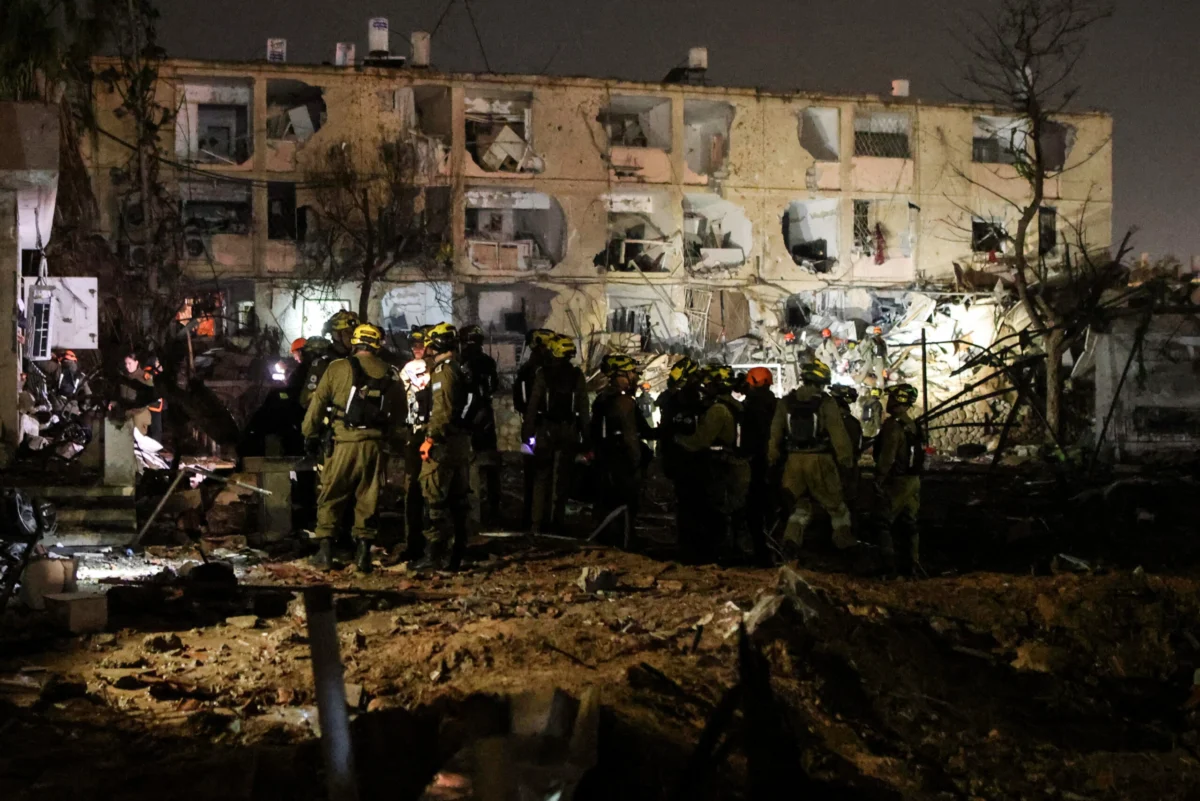
The urgency of understanding Israel’s nuclear doctrine is amplified by the current volatile geopolitical landscape. The ongoing military engagement between the United States and Israel against Iran, coupled with Iran’s recent strike on the Israeli city of Dimona – home to a key nuclear research facility – highlights a dangerous escalation. This retaliatory action demonstrates Iran’s capacity to respond to attacks on its own nuclear infrastructure, underscoring the potential for a spiraling conflict.
Israel’s current regional posture is characterized by a complex web of interconnected conflicts and confrontations. Engagements in Gaza, Lebanon, Syria, and directly with Iran mean that the possibility of multi-front warfare is no longer a theoretical concern but a tangible reality. In such a scenario, Israeli leadership might perceive itself not merely as engaged in conventional military operations but as facing a coordinated regional coalition.
The Lowered Threshold for Extreme Escalation
When states interpret conflicts as existential struggles for national survival, the psychological barrier to employing extreme measures, including potentially nuclear escalation, is significantly lowered. This is precisely why most nations maintain rigid strategic frameworks and robust international oversight for their nuclear doctrines, aiming to constrain the perceived utility of these devastating weapons.
However, Israel’s nuclear arsenal operates largely outside this framework of international regulation. As a non-signatory to the Nuclear Non-Proliferation Treaty (NPT), Israel’s nuclear facilities are not subject to the same stringent inspection regimes that govern the vast majority of states possessing nuclear technology or weapons. This creates a unique and concerning global security anomaly: a nuclear-armed state whose capabilities and operational doctrine remain largely shielded from international scrutiny. For decades, the global focus on preventing nuclear proliferation in the Middle East has largely overlooked the region’s sole, undeclared nuclear power.
The Gaza Campaign and the Scale of Force
Recent events in Gaza further complicate the discussion of Israel’s escalation thresholds. Since October 2023, Israel’s military campaign in response to Hamas attacks has resulted in tens of thousands of Palestinian casualties and the widespread destruction of Gaza’s infrastructure. The scale of devastation, with entire neighborhoods flattened and critical civilian facilities like hospitals and schools repeatedly targeted, has led numerous human rights organizations and legal scholars to describe the campaign as potentially genocidal.
The intensity of the bombardment has been extraordinary. Military analysts have estimated that the explosive power unleashed in Gaza during the early stages of the conflict alone may have surpassed the explosive yield of the atomic bomb dropped on Hiroshima. While this comparison does not equate conventional bombing with nuclear devastation, it offers a stark indicator of the immense destructive force Israeli leaders have been willing to deploy when they perceive national security to be at stake. This raises a deeply unsettling question: if such overwhelming destruction can be wrought through conventional means, what would the threshold for nuclear use be if Israel believed it was facing defeat?
Domestic Political Climate and Shifting Perceptions
Adding another layer of complexity to the assessment of Israel’s nuclear doctrine is the prevailing domestic political climate. The current Israeli government is widely characterized as the most hardline in the nation’s history, with ministers who have openly espoused extreme positions regarding Palestinians and regional adversaries. This, coupled with significant political shifts within Israeli society in recent years, including a growing embrace of more nationalist and militarized policies, suggests a potentially lowered threshold for perceiving an "existential threat."
Global Implications and the Call to Action
The confluence of these factors – Israel’s undeclared nuclear arsenal, its unique "nuclear opacity" doctrine, escalating regional conflicts, and a domestic political environment potentially conducive to lower thresholds for existential threat perception – presents a profound challenge to global security. Nuclear-armed states and international institutions tasked with preventing nuclear Armageddon must confront this situation with renewed urgency. The current US-Israeli confrontation with Iran underscores the immediate need for greater transparency and dialogue regarding Israel’s nuclear posture, moving beyond decades of tacit acceptance of its nuclear ambiguity to address the potential ramifications of its doctrine in an increasingly volatile Middle East. The world has long avoided confronting this uncomfortable reality; the escalating stakes now demand that it do so.