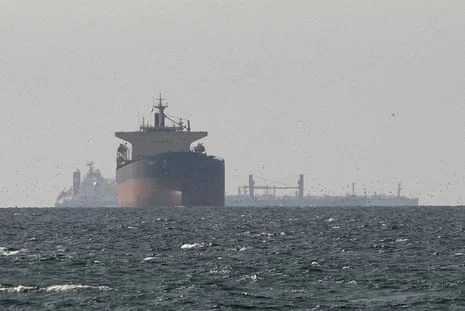
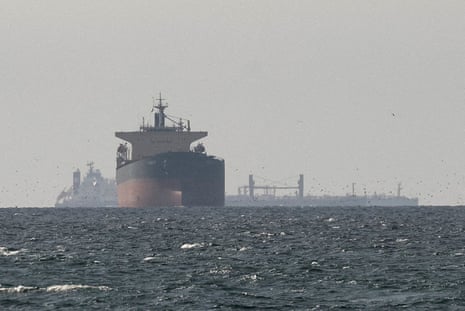
An Iranian representative to the United Nations International Maritime Organization, Ali Mousavi, stated Sunday that the strategically vital waterway remains accessible to most global traffic provided specific security protocols are met, while explicitly excluding vessels linked to the United States, Israel, and their regional allies. The announcement comes as a 48-hour ultimatum from the White House looms, with President Donald Trump threatening to "obliterate" Iranian energy infrastructure if the transit route is not fully reopened to all international shipping.
Mousavi, speaking through Iran’s state-aligned Mehr news agency, asserted that the "root" of the current maritime paralysis lies in what he termed US-Israeli aggression. He emphasized that while diplomacy remains Tehran’s stated priority, the restoration of traffic depends on a "complete cessation of aggression" and the establishment of mutual trust. This rhetoric highlights a deepening divide in the Persian Gulf, where the Iranian government has effectively created a tiered system of maritime access, permitting "friendly" nations such as China, India, and Pakistan to pass while targeting others.
The crisis, now entering its fourth week, has fundamentally destabilized global energy markets. The Strait of Hormuz serves as the world’s most important oil chokepoint, with approximately one-fifth of the world’s seaborne crude oil and liquefied natural gas passing through its narrowest point daily. Reports of Iranian forces laying mines in the waterway and launching targeted attacks on tankers have driven insurance premiums to record highs and forced major shipping conglomerates to reroute vessels around the Cape of Good Hope, adding weeks to delivery schedules.

The 48-Hour Ultimatum and the Strait of Hormuz Open to All but Ships of ‘Enemy’ Countries
The standoff reached a fever pitch late Saturday when President Trump utilized social media to issue a stark military warning. Facing intense domestic pressure as gasoline prices at American pumps soar, the President declared that the United States would hit and "obliterate" Iranian power plants, starting with the nation’s largest facilities, if the waterway is not cleared within two days. This ultimatum marks a sharp reversal from earlier in the week, when the administration had briefly suggested it was looking for ways to "wind down" the conflict.
In response to the American threat, Iran’s military operational command, Khatam Al-Anbiya, issued a counter-warning via the Fars news agency. The command stated that any violation of Iran’s energy or fuel infrastructure would trigger immediate retaliatory strikes against U.S. and allied energy, information technology, and desalination plants throughout the Middle East. This "eye-for-an-eye" military doctrine has raised fears of a total regional war that could permanently damage the infrastructure required for global energy stability.
Pentagon officials are reportedly reviewing plans for a significant escalation, which may include the occupation or blockade of Kharg Island. As Iran’s primary oil export terminal, Kharg Island is the lifeblood of the Iranian economy. A move to seize the island would be intended to force Tehran’s hand, but military analysts warn it could also lead to a protracted ground conflict and the total closure of the Gulf to all commercial activity for the foreseeable future.
Escalating Military Confrontation Across the Region
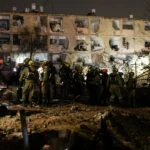
While the rhetorical battle centers on the Strait of Hormuz, the physical conflict has expanded to multiple fronts. On Saturday, a massive barrage of Iranian ballistic missiles struck southern Israel, wounding more than 100 people in the cities of Arad and Dimona. Israeli medical officials reported that at least 10 individuals are in serious condition. The Israeli Air Force has launched an internal investigation into why its multi-layered air defense systems failed to intercept several of the incoming projectiles.
In the early hours of Sunday, the Israeli military responded with a series of precision airstrikes in Tehran. Residents in the Iranian capital reported hearing multiple explosions, though state media has been slow to provide an official damage assessment. Simultaneously, the International Atomic Energy Agency (IAEA) confirmed it was monitoring the situation near the Negev nuclear research center in Israel, stating that there was currently no evidence of damage to the facility following the strikes near Dimona.
The conflict has also spilled over into neighboring territories. Saudi Arabia’s Ministry of Defense announced Sunday that it had detected three missiles launched toward Riyadh. While one was successfully intercepted, two fell in uninhabited desert regions. In Iraq, a U.S. diplomatic and logistics center at Baghdad International Airport was targeted by at least six separate drone and rocket strikes. These attacks underscore the "asymmetric" nature of the Iranian campaign, utilizing regional proxies and unmanned systems to harass U.S. interests outside the primary theater of war.
Maritime Security and the Threat of Naval Mines
The claim that the Strait of Hormuz open to all but ships of ‘enemy’ countries is complicated by the physical reality of the waterway. Intelligence reports from several Western nations suggest that Iran has deployed sophisticated naval mines throughout the shipping lanes. These mines make the passage hazardous even for "friendly" vessels, as the risk of accidental strikes remains high.
Japan, which relies on the Strait of Hormuz for 90% of its oil imports, has taken a cautious diplomatic stance. Foreign Minister Toshimitsu Motegi indicated Sunday that Tokyo might consider deploying the Japanese Self-Defense Forces for minesweeping operations, but only if a comprehensive ceasefire is reached. Japan has been in direct contact with Iranian Foreign Minister Abbas Araqchi to secure safe passage for Japanese-linked tankers, though no formal agreement has been finalized.

Global Economic Shockwaves and Energy Shortages
The effective closure of the Gulf is no longer a localized issue; it has become a global economic emergency. Oil prices settled at four-year highs following Iraq’s declaration of force majeure on its oilfields and Israel’s strike on a major Iranian gas field. In Europe, natural gas prices surged by 35% in a single week, prompting fears of a severe industrial slowdown and a winter of rationing.
Developing nations are bearing the brunt of the price spikes. Sri Lanka announced its second fuel price hike in two weeks on Sunday, raising the cost of petrol by 25%. To conserve energy, the Sri Lankan government has mandated a four-day work week and reintroduced work-from-home protocols for all non-essential sectors. President Anura Kumara Dissanayake warned his citizens to prepare for a "prolonged conflict" that could fundamentally alter the country’s energy security.
Australia is also feeling the impact of supply chain disruptions. Federal Energy Minister Chris Bowen confirmed that six major oil shipments from Malaysia, Singapore, and South Korea bound for Australia were cancelled or deferred in recent days. While Australia currently maintains 38 days of petrol reserves, the government is scrambling to secure alternative supplies from the United States to avoid a domestic fuel crisis in late April.
Leadership Uncertainty and the Information War in Tehran
Internal dynamics within Iran have added another layer of complexity to the crisis. As the country marks the end of Ramadan and the Persian New Year, Nowruz, the new Supreme Leader, Mojtaba Khamenei, has been conspicuously absent from public view. Traditionally, the Supreme Leader leads the Eid al-Fitr prayers at the Imam Khomeini grand mosque, but this year the duties were performed by the head of the judiciary, Gholam Hossein Mohseni Ejei.

Mojtaba Khamenei assumed power earlier this month following the death of his father, Ayatollah Ali Khamenei, in a targeted strike. Rumors regarding Mojtaba’s health and whereabouts have circulated since reports surfaced that he may have been injured in the same attack that killed his father. His continued absence during a time of national crisis has fueled speculation about a potential power struggle within the Islamic Republic’s ruling elite or the military’s Islamic Revolutionary Guard Corps (IRGC).
While the leadership remains behind closed doors, Iran has radically overhauled its social media strategy. Cyber experts have identified a massive "asymmetric" information campaign designed to exploit the war’s unpopularity in the West. This campaign includes the use of AI-generated videos and memes aimed at American and Israeli audiences. Some of these deepfake videos falsely depict the sinking of the USS Abraham Lincoln or show Israeli soldiers in states of emotional distress, part of a broader effort to exert moral pressure on the U.S. administration to curtail its military operations.
The Path Forward: Diplomacy or Obliteration
As the 48-hour clock ticks down, the international community remains on edge. The United Kingdom and several NATO members have expressed support for defensive actions against Iranian threats but have notably distanced themselves from the more aggressive rhetoric coming from the Trump administration. British Foreign Secretary Yvette Cooper emphasized that while the UK condemns the recent Iranian missile attacks on the Diego Garcia military base, a swift diplomatic resolution is the only viable path to preventing a global depression.
The humanitarian toll of the conflict continues to mount. According to the Associated Press, the death toll has exceeded 1,500 in Iran and 1,000 in Lebanon, with millions more displaced. In Israel, the health ministry reported that over 4,500 people have been treated for injuries since the conflict began on February 28. The coming days will determine whether the "enemy" ships excluded by Tehran will lead to a total reopening of the waterway or a final, devastating escalation that reshapes the Middle East for decades.