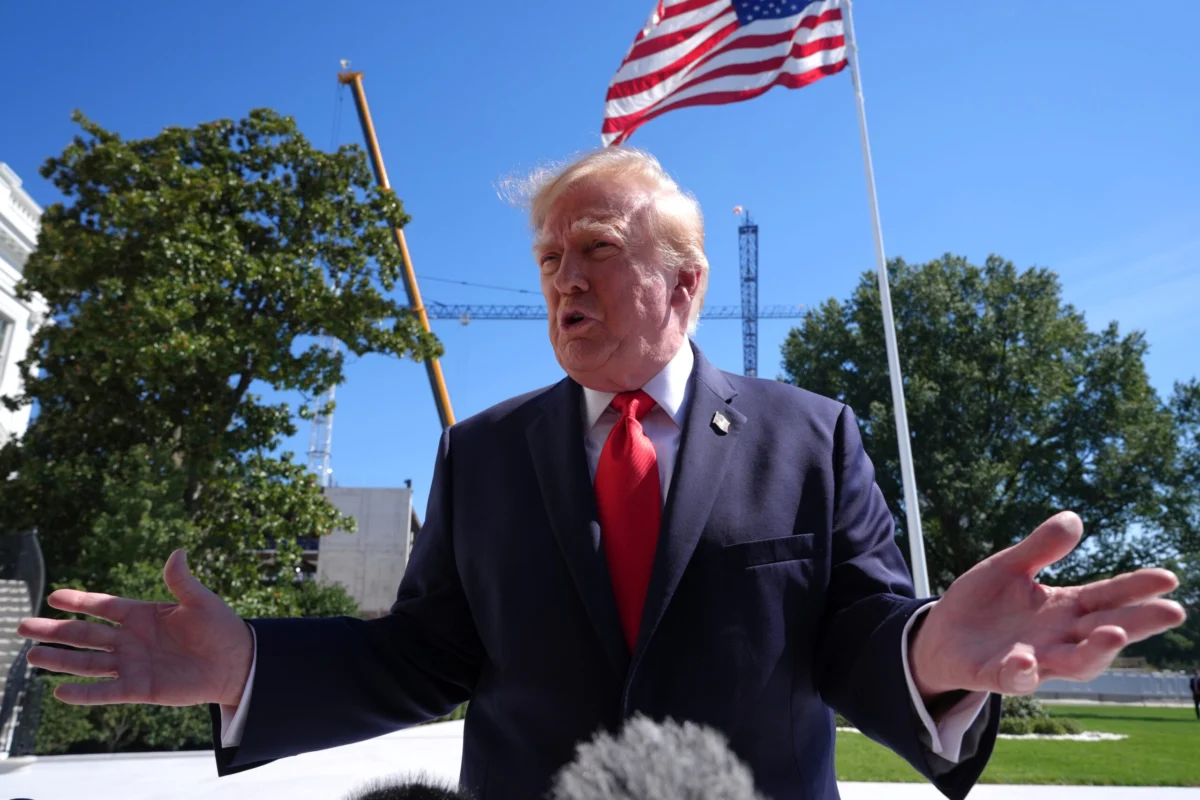
President Donald Trump announced Monday that a formal U.S. naval blockade of the Strait of Hormuz has commenced, effectively escalating the 44-day conflict between the United States, Israel, and Iran. During an unscheduled press conference at the White House, the president confirmed that U.S. Central Command began enforcing the maritime restrictions at 10 a.m. ET, targeting all Iranian ports and coastal infrastructure. Despite the aggressive military posture, Trump told reporters that Tehran had reached out earlier that morning expressing a desire to negotiate a diplomatic resolution.
The president’s announcement comes on the heels of failed high-level negotiations in Pakistan over the weekend. Trump insisted that while he is open to a deal, the United States will not accept any agreement that allows Iran to retain a nuclear weapons program or enrichment capabilities. "Iran will not have a nuclear weapon," Trump said, appearing alongside a delivery of McDonald’s as he addressed the press. "We can’t let a country blackmail or extort the world."
The blockade represents a significant shift in global trade security, as the Strait of Hormuz serves as the primary artery for approximately 20% of the world’s oil and gas supply. Under the new orders, U.S. naval forces are authorized to intercept, divert, and capture any vessel attempting to enter or exit blockaded Iranian waters. Trump’s social media rhetoric mirrored this escalation, with the president warning on Truth Social that any ship approaching the blockade would be "immediately eliminated" using a "system of kill" similar to maritime drug interdiction tactics.

Strategic Implementation of the Strait of Hormuz Blockade
U.S. Central Command (Centcom) issued formal notices to seafarers and the United Kingdom Maritime Trade Operations (UKMTO) detailing the scope of the operation. The blockade applies to all vessel traffic regardless of the flag it flies, focusing on the entire Iranian coastline and its energy infrastructure. While the U.S. military stated that neutral transit passage to non-Iranian destinations would not be impeded, officials warned that any shipping in the region would likely encounter a heavy American military presence.
Military analysts suggest the blockade is designed to strip Iran of its primary economic leverage. By choking off Tehran’s ability to export petroleum products, the Trump administration aims to force a total capitulation regarding Iran’s ballistic missile and nuclear programs. Trump claimed Monday that the Iranian Navy has already been "obliterated," stating that 158 Iranian vessels are currently "at the bottom of the sea."
The administration’s strategy also includes the potential for resumed limited military strikes. Reports indicate that the White House is considering targeting Iranian power plants and civilian energy grids if the blockade does not yield a quick diplomatic breakthrough. "I could take out Iran in one day," Trump told reporters, underscoring his willingness to escalate beyond maritime restrictions.
Diplomatic Deadlock and the Pakistan Negotiations
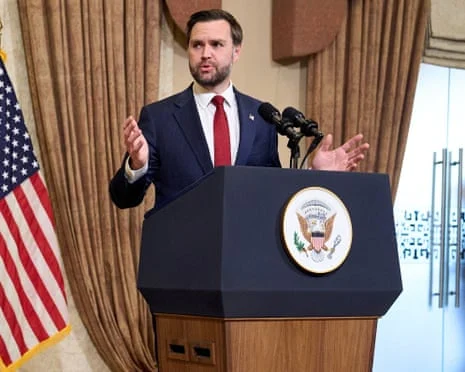
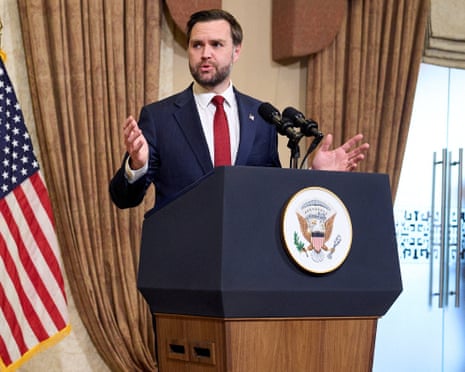
The move to a full blockade followed 21 hours of intense negotiations in Islamabad, Pakistan, led by Vice President JD Vance. The American delegation reportedly presented "clear red lines" to Iranian officials, which included the surrender of all enriched uranium and the establishment of a permanent, intrusive verification mechanism. Vance told Fox News on Monday that "the ball is in the Iranian court" and that the U.S. has shown "no flexibility" on the nuclear issue.

Tehran, however, has characterized the U.S. position as "excessive demands." Iranian President Masoud Pezeshkian reportedly told French President Emmanuel Macron that the United States’ irrational stance prevented a ceasefire agreement. Iranian officials have floated a counter-proposal to reopen the waterway only if they are permitted to charge a transit fee of up to $2 million per ship—a plan Trump and his allies have rejected as an illegal toll on the freedom of navigation.
Internal discussions are reportedly continuing within the White House regarding the logistics of a potential second round of talks. While Trump stated he "doesn’t care" if Iran returns to the table, some administration officials are quietly preparing for a possible sit-down if a mediator can be secured. However, the current rhetoric from both Washington and Tehran suggests that a diplomatic "off-ramp" remains elusive.
Global Economic Fallout and Rising Energy Costs
The confirmation of the blockade sent shockwaves through global energy markets. Oil prices, which had already been volatile, briefly surged above the $100 per barrel threshold on Monday morning. Brent crude, the international benchmark, rose nearly 7% to $101.70, while U.S. crude reached $104.24. Although prices eased slightly later in the day following Trump’s claims of a potential deal, market analysts warn that a prolonged closure of the strait will cause permanent upward pressure on fuel costs.
The humanitarian implications of the conflict are equally dire. The United Nations Development Programme (UNDP) issued a report Monday warning that the economic fallout from the war could plunge more than 32 million people worldwide into poverty. The agency described a "triple shock" of surging energy costs, food insecurity, and weakened economic growth, with developing nations expected to suffer the most.
European Commission President Ursula von der Leyen noted that the Middle East crisis has already added €22 billion to the EU’s energy import bill without the addition of a "single molecule of energy." In response, the EU is moving to accelerate its transition to renewable and nuclear energy to reduce dependency on Middle Eastern fossil fuels. Von der Leyen emphasized that the restoration of navigation in the Strait of Hormuz is of "paramount importance" to European stability.
Strains in the NATO Alliance
The U.S.-led blockade has created visible friction within the NATO alliance. Several key allies, including the United Kingdom, Germany, Italy, and Spain, have explicitly refused to provide naval support for the blockade. British Prime Minister Keir Starmer told the BBC that while the UK maintains a defensive presence in the region to protect British interests, it will not be "dragged into the war."
The refusal of NATO allies to participate has reportedly angered President Trump, who has frequently criticized European nations for what he perceives as a lack of military contribution. Trump responded to Starmer’s stance by comparing him to Neville Chamberlain, accusing the British leader of pursuing a policy of "appeasement" toward Tehran. Despite this, France has announced plans to organize a separate multinational mission to restore navigation in the strait, distinct from the U.S. blockade, once conditions allow.
Australian Prime Minister Anthony Albanese also called for a resumption of negotiations, stating that his government had not been asked to participate in the blockade. The divergence in strategy between Washington and its traditional allies suggests a growing isolation of the U.S. position on the Middle East crisis, even as Israel remains in "constant coordination" with the Trump administration.
Domestic Resistance and War Powers Resolutions
In Washington, the administration faces mounting pressure from Congressional Democrats. A group of senior senators, including Mark Kelly of Arizona and Kirsten Gillibrand of New York, filed a resolution Monday to limit the president’s war powers and force an end to the conflict. The lawmakers argued that the war is putting American service members at risk and driving up domestic costs for families.
"Americans want Washington to improve their lives, not to drag us into another endless conflict in the Middle East," Senator Kelly said in a statement. Democratic leadership in both the House and Senate indicated they would force votes on the matter this week. While Republicans have successfully thwarted previous efforts to check the president’s military authority, the economic impact of the blockade is beginning to create cracks in bipartisan support.
Escalating Tensions with the Vatican
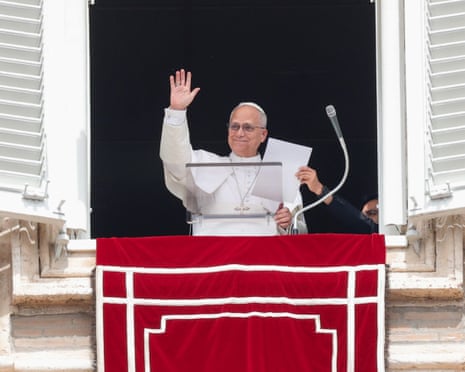
Adding a unique dimension to the crisis is an escalating public row between President Trump and Pope Leo XIV. The U.S.-born pontiff recently denounced the "delusion of omnipotence" fueling the war and urged political leaders to prioritize peace. Trump responded with a 300-word diatribe on social media, calling the Pope "weak on crime" and "terrible for foreign policy," and accusing him of catering to the "Radical Left."
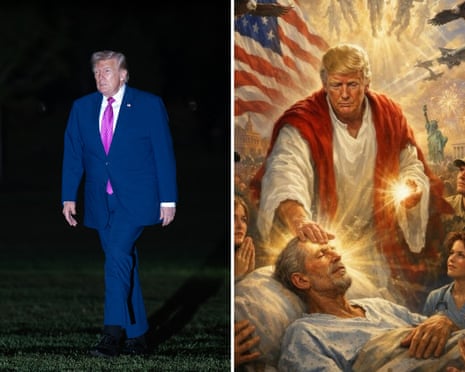
The controversy deepened on Monday when Trump addressed a now-deleted AI-generated image he had posted, which depicted him as a Jesus-like figure performing a miraculous healing. Trump sought to downplay the post, claiming he thought the image was of him as a doctor working for the Red Cross. "I do make people better. A lot better," Trump told reporters, refusing to apologize to the Pope. Vice President Vance echoed this sentiment, suggesting the Vatican should "stick to matters of morality" and leave public policy to the U.S. president.
Pope Leo XIV, speaking to reporters aboard the papal plane, stated he has "no intention to debate" with the president but vowed to continue speaking out against the war. The friction between the White House and the Holy See has alienated some of Trump’s evangelical and Catholic supporters, further complicating the domestic political landscape as the Middle East remains on the brink of total war.