Wisconsin voters head to the polls Tuesday in a pivotal primary election that will not only shape the state’s political landscape for the coming years but also offer a significant barometer for the national Democratic Party’s trajectory. Following a recent progressive victory in Michigan’s U.S. Senate race, the Badger State’s contests, particularly the Democratic primary for governor, are drawing intense scrutiny as they serve as a proxy battleground between the party’s left wing and its more centrist establishment. The outcomes are anticipated to provide crucial insights into the preferences of Democratic voters nationwide ahead of the November midterm elections.
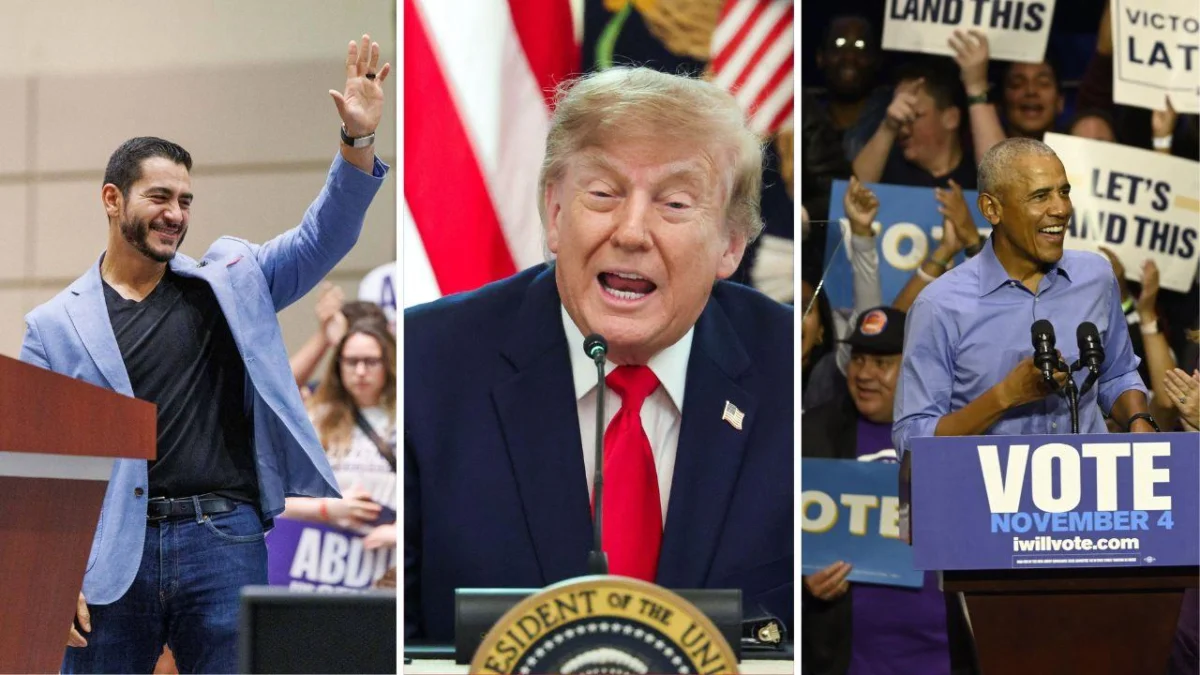
The significance of Wisconsin’s Democratic gubernatorial primary is amplified by its timing and the broader political climate. Just days after Abdul El-Sayed, a progressive candidate, secured a notable win in Michigan’s U.S. Senate primary against an establishment-backed opponent, the focus shifts to Wisconsin. This pattern of outsider candidates outperforming traditional favorites has become a recurring theme in this election cycle, signaling a palpable frustration among many Democratic voters following the party’s performance in the 2024 presidential election. The ongoing internal debate within the party regarding U.S. support for Israel further complicates these dynamics, creating a complex tapestry of voter sentiment.
The question of whether progressive candidates can resonate with voters in swing states like Wisconsin and Michigan, which narrowly tipped the electoral balance in recent presidential elections, remains a key point of discussion. While Donald Trump won both states in 2024, Joe Biden had secured them in 2020, underscoring their status as critical battlegrounds. Wisconsin’s primary will be a crucial test case to observe if the trend of progressive victories can extend into these competitive Midwestern territories.
The likely Republican nominee in the gubernatorial race, incumbent Representative Tom Tiffany, a staunch ally of former President Trump, is already framing the election as a stark choice between a "socialist agenda" and "common sense," setting a combative tone for the general election. This framing is likely to be a significant factor as the Democratic nominee prepares to face him.
The Gubernatorial Showdown: Hong vs. Crowley
At the heart of the Wisconsin Democratic primary for governor are two distinctly different candidates: State Representative Francesca Hong and Milwaukee County Executive David Crowley. Their divergent platforms and backgrounds represent the ideological divide within the Democratic Party.
Francesca Hong, a lawmaker and former restaurant worker, has embraced the label of democratic socialist. Her campaign has centered on ambitious policy proposals such as universal free childcare, the cancellation of student debt, and the abolition of U.S. Immigration and Customs Enforcement (ICE). If elected, Hong would make history as Wisconsin’s first female governor and its first Asian American governor.
However, Hong’s candidacy has not been without controversy. Past social media posts, including endorsements of policies advocated by the Democratic Socialists of America (DSA) such as abolishing the U.S. Senate and defunding police departments, have drawn significant scrutiny. She has since sought to distance herself from some of these more radical positions, asserting that she does not fully endorse the national DSA platform and has pledged not to cut police budgets. Hong emphasizes her membership in the local Madison DSA chapter, distinguishing it from national affiliation.
Furthermore, Hong has been a vocal critic of Israel’s actions in Gaza, describing them as genocide and advocating for Palestinian rights. She has also called for the repeal of a Wisconsin law that prohibits state agencies from entering into contracts with companies that boycott Israel. Her campaign has garnered endorsements from prominent progressive figures, including Minnesota Democratic U.S. Representative Ilhan Omar, and she has appeared alongside left-wing commentator Hasan Piker, further solidifying her progressive credentials.
Her primary challenger, David Crowley, the Milwaukee County Executive, initially withdrew from the race but re-entered in mid-July after receiving the endorsement of outgoing Governor Tony Evers. This endorsement quickly positioned Crowley as the establishment favorite, with his supporters arguing that he represents the strongest option to retain the governor’s office for Democrats.
Crowley, however, rejects the label of an "establishment Democrat," even referring to it as a "slur." He also has the potential to make history as Wisconsin’s first Black governor. His campaign strategy has focused on appealing to undecided voters, seeking to build a broader coalition.
A late July poll conducted by Marquette University Law School indicated that Hong held a significant lead among Wisconsin Democratic primary voters, suggesting a strong base of support for her progressive platform. This poll suggests a potential shift in the state’s Democratic electorate, aligning with the broader national trend observed in other primaries.
A Turbulent Path to the Ballot
The Democratic gubernatorial primary in Wisconsin has been marked by a series of unexpected withdrawals and political maneuvers, contributing to a chaotic campaign season. Lieutenant Governor Sara Rodriguez was among the first major Democrats to exit the race, citing a campaign finance controversy. Missy Hughes, former CEO of the Wisconsin Economic Development Corporation, also ended her bid, further consolidating the field.
The most dramatic development occurred less than two weeks before Election Day, when former Lieutenant Governor Mandela Barnes withdrew. This decision followed the resurfacing of allegations of inappropriate behavior during his campaign. Barnes has vehemently denied any wrongdoing. A review commissioned by the Wisconsin Democratic Party, according to the Associated Press, found no actionable evidence due to the anonymous nature and lack of specific details in the allegations.
Crowley’s subsequent re-entry into the race, bolstered by Governor Evers’ endorsement, significantly altered the dynamics. Compounding the complexity, all candidate withdrawals occurred after Wisconsin’s official filing deadline. This means that the names of candidates who are no longer actively campaigning remain on the ballot. With nearly 128,000 absentee ballots already returned, a substantial number of voters have cast their ballots for individuals who have since withdrawn. A legal challenge seeking to cancel these absentee ballots and allow for new voting was ultimately rejected by a judge, leaving the existing ballots in place.
Beyond the Governorship: Other Key Races to Watch
While the gubernatorial primary garners the most attention, several other contests on Tuesday’s ballot hold significant implications for Wisconsin’s political future.
In western Wisconsin’s 3rd Congressional District, Democrats are choosing between Rebecca Cooke and Emily Berge. Cooke, the party’s nominee in 2024, narrowly lost to Republican Representative Derrick Van Orden by approximately three percentage points, positioning her as a strong contender to challenge him again. Berge, the former president of the Eau Claire City Council, also seeks to unseat Van Orden in what is considered one of the nation’s most competitive House races, presenting a key opportunity for Democrats to flip a Republican-held seat.
Another noteworthy race is in the state’s 7th Congressional District. This contest has largely been shaped by Michael Alfonso, the 26-year-old son-in-law of U.S. Transportation Secretary Sean Duffy, who has secured Trump’s endorsement. Alfonso faces a competitive primary field, including Jessi Ebben, a manufacturing strategist and grassroots Trump organizer whose platform emphasizes border security, expanding American manufacturing, and protecting gun rights. Kevin Hermening, a former U.S. Marine who endured 444 days as a hostage in Iran starting in 1979, also presents a unique perspective in the race. This district is anticipated to remain safely Republican, meaning the primary winner will be heavily favored in the general election.
Democrats in the 7th Congressional District are also selecting their nominee, with Chris Armstrong, former state Representative Fred Clark, and Ginger Murray vying for the party’s nomination. Their ability to mount a competitive challenge in this conservative-leaning district will be a key factor in November.
Voting Information
Polls across Wisconsin are scheduled to open at 7 a.m. local time and will remain open until 8 p.m. local time on Tuesday. This provides voters with a full day to cast their ballots in these crucial primary elections. The outcome of these races will not only determine who appears on the November ballot but will also send ripples through the national political discourse, reflecting the evolving priorities and ideological leanings of the Democratic electorate.