U.S. Treasury Secretary Scott Bessent expressed high confidence Wednesday that Kevin Warsh, President Donald Trump’s nominee to lead the Federal Reserve, will successfully navigate his Senate confirmation hearing next week despite a deepening standoff on Capitol Hill. The statement comes as the White House intensifies its pressure on incumbent Fed Chair Jerome Powell, with the president threatening to terminate Powell’s tenure by the end of the month if the Senate fails to install his successor. The looming transition at the central bank coincides with a period of intense economic volatility, driven by a 3.3% annual inflation rate and the massive fiscal burden of the ongoing conflict with Iran.
Bessent, speaking to reporters at the White House, maintained that Republican members of the Senate Banking Committee are "aligned" in their support for Warsh. However, the nomination remains imperiled by a narrow GOP majority and the public defection of Senator Thom Tillis. The outgoing North Carolina Republican has vowed to block any nominee until the administration drops its federal investigation into Powell’s management of Federal Reserve facility renovations. Tillis has characterized the probe as a politically motivated attempt to punish Powell for his refusal to lower interest rates in accordance with the president’s demands.
The administrative deadline for the transition is May 15, the date Powell’s term is set to expire. While standard protocol often allows an incumbent chair to remain in an acting capacity until a successor is confirmed, President Trump told Fox News he would move to oust Powell immediately if Warsh is not approved. The president described the ongoing investigation into Powell as more than a criminal inquiry, labeling it a response to "incompetence."
The Battle for the Federal Reserve and Central Bank Independence
The confirmation hearing for Kevin Warsh is scheduled for April 21, and it is expected to be one of the most contentious in recent history. Lawmakers from both parties have signaled they intend to grill Warsh not only on his monetary policy views but also on his personal history, including past ties to disgraced financier Jeffrey Epstein. For the White House, the appointment of Warsh represents a critical step in aligning the central bank with the administration’s "America First" economic agenda, which prioritizes aggressive growth and lower borrowing costs.

Economists and market analysts have expressed concern that the public threats against Powell undermine the traditional independence of the Federal Reserve. This independence is seen as a cornerstone of global financial stability, ensuring that interest rate decisions are based on data rather than political cycles. If the president follows through on his threat to fire Powell before a successor is in place, it could trigger significant market turbulence at a time when the U.S. economy is already grappling with the costs of a multi-front war.
Bessent dismissed these concerns, stating he remains "very optimistic" that Warsh will be the chair of the Fed on time. The Treasury Secretary suggested that the internal Republican discord would be resolved before the vote, though he did not specify how the administration intended to appease Senator Tillis or other potential GOP holdouts who are wary of the precedent being set by Powell’s removal.
Economic Pressure and Tax Day Realities
The political drama in Washington unfolded against the backdrop of Tax Day, as millions of Americans filed their federal returns amid a climate of rising living costs. While the Trump administration spent the day touting the benefits of the 2025 tax cuts, new data suggests the impact on the average household has been overshadowed by inflation and military expenditures. According to a report from the Institute for Policy Studies, the average taxpaying household saw roughly $4,049 of their federal income taxes diverted to military-related spending in 2025, an increase from the previous year.
U.S. inflation surged 0.9% in March alone, bringing the annual rate to 3.3%. This spike is largely attributed to the economic fallout of the war with Iran, which began in February 2026. Pentagon officials recently informed lawmakers that the first six days of the conflict alone cost the U.S. treasury more than $11.3 billion. In response to these rising costs, the White House has proposed a historic $1.5 trillion defense budget for 2027, a $440 billion increase over previous levels, while simultaneously calling for 10% cuts to various domestic programs.
During a White House briefing, Bessent was pressed on when American consumers might see relief at the gas pump. He projected that gas prices could return to the $3 range by the summer, provided that negotiations with Iran lead to a permanent reopening of the Strait of Hormuz. Bessent noted that Middle Eastern counterparts have indicated they could restore full oil pumping capacity within one week of the waterway being cleared of naval blockades.
The Iranian Conflict and Global Energy Markets
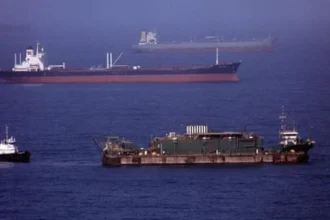
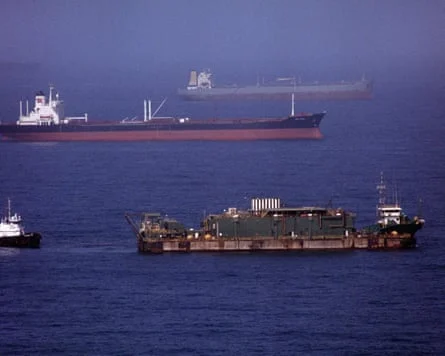
The war with Iran remains the primary driver of both domestic fiscal policy and international tension. President Trump has implemented a counter-blockade of the Strait of Hormuz, a move that has significantly disrupted global shipping. Data from AXSMarine indicates that daily vessel crossings through the choke point have plummeted back into the single digits following a brief period of recovery. Currently, nearly 1,000 merchant vessels are tracked west of the strait, with more than 30% operating without automatic identity signals to avoid detection.
The administration’s "maximum pressure" campaign has extended to its closest allies. In a recent interview, President Trump threatened to renegotiate the U.S.-UK trade deal signed last year, citing his frustration with the British government’s lack of support for the Iran conflict. Prime Minister Keir Starmer and Chancellor Rachel Reeves have publicly criticized the U.S. for launching strikes without a clear exit strategy, warning that the resulting global recession could hit the United Kingdom harder than any other G7 nation.
The president countered these criticisms by describing the "special relationship" as being in a "sad state." He accused the British government of not being there "when we needed them" and suggested that the favorable terms of the existing trade deal were a gift that could be revoked. This diplomatic friction highlights the growing isolation of the U.S. on the world stage as it pursues a unilateral military strategy in the Middle East.
Domestic Politics and the Religious Divide
The administration’s aggressive posture has also sparked a rare public feud with the Vatican. Vice President JD Vance, speaking at a Turning Point USA event in Georgia, issued a stern warning to Pope Leo XIV, who has been an outspoken critic of the war. After the Pope suggested that a "delusion of omnipotence" was fueling the conflict, the president labeled the pontiff "weak on crime" and a caterer to "radical left lunatics." Vance added that it was "very, very important for the pope to be careful when he talks about matters of theology."
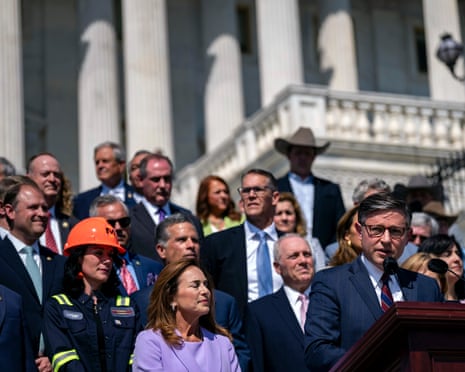
House Speaker Mike Johnson attempted to de-escalate the rhetoric on Wednesday, stating he did not wish to engage in a theological debate with the Pope. While Johnson maintained his respect for the religious leader, he noted that "if you wade into political waters, I think you should expect some political response." This cultural clash has been further complicated by the president’s recent social media activity, which included sharing AI-generated images of himself in Christ-like poses—a move that drew backlash even from some of his conservative Christian supporters.

Legislative Stalemates and Judicial Reversals
In Congress, the administration faces significant hurdles beyond the Federal Reserve confirmation. House Speaker Mike Johnson was forced to postpone a vote on the extension of Section 702 of the Foreign Intelligence Surveillance Act (FISA) after a revolt by Republican hardliners. Despite the president’s sudden reversal in favor of a "clean bill" to support military efforts, several GOP lawmakers are demanding significant reforms to protect American privacy before authorizing the intelligence-gathering tool.
Simultaneously, the Department of Justice has taken the controversial step of asking a federal appeals court to throw out the seditious conspiracy convictions of leaders from the Proud Boys and Oath Keepers involved in the January 6 Capitol attack. This move goes beyond the clemency already granted by the president and signals a wholesale effort to legally rebrand the events of that day.
As the May 15 deadline for the Federal Reserve transition approaches, the White House remains locked in a high-stakes struggle to reshape the nation’s financial, judicial, and diplomatic foundations. With Scott Bessent confident Fed chair nominee will be confirmed, the coming weeks will test the administration’s ability to maintain party discipline in the face of mounting economic and international pressure. The outcome of the Warsh confirmation will likely serve as a definitive signal of the administration’s control over the levers of the U.S. economy for the remainder of the term.