In a remote corner of India, far from the glitz and global spotlight of the FIFA World Cup, a vibrant football tournament is unfolding with a unique, deeply rooted cultural flair. As the world celebrated football’s greatest stars, the village of Tirilbasa in Jharkhand’s Chaibasa district has been buzzing with its own version of the beautiful game, culminating in a tournament where the ultimate prize is not a gleaming trophy, but a herd of live goats.
From July 14 to July 17, Tirilbasa, a village nestled in a tribal-dominated region of eastern India, hosted the Rangila Star Tirilbasa tournament. The event brought together teams from 64 neighboring villages, transforming the quiet landscape into a hub of athletic competition and communal celebration. The tournament, coinciding with the global football spectacle, offered more than just bragging rights; it provided a platform to showcase local talent and reinforce cultural traditions, with a prize pool that included both cash and live animals.
A Tournament Rooted in Tradition
The Rangila Star Tirilbasa tournament, with "Rangila" meaning "colorful" in Hindi, has become a significant fixture in the region’s sporting calendar. Now in its fifth edition, the event meticulously adheres to FIFA rules, employing certified referees and popular commentators to ensure fair play and maintain the integrity of the game. This commitment to established footballing standards is blended with a distinctly indigenous approach to its rewards and organization, reflecting the heritage of the local Ho community.

The Ho people, an Austroasiatic tribal group native to the Kolhan region of Jharkhand, number over a million across India. Their identity is deeply intertwined with the forests and their ancestral lands. The word "Ho" itself translates to "human" or "people," underscoring their strong sense of community and belonging. For the Ho, and many other tribal communities in Jharkhand, traditional and religious activities are often communal affairs, fostering strong bonds among kinsfolk. Football tournaments like the Rangila Star serve as vital occasions for these communities to gather, celebrate, and strengthen their cultural ties.
The Prized "Khassi" as Trophies
The most distinctive aspect of the Rangila Star Tirilbasa tournament is its unconventional prize for the top-performing teams: goats, known locally as "khassi." These castrated male goats are not merely livestock; they are an integral part of the Ho people’s cultural fabric, playing a crucial role in religious ceremonies and communal feasts. The tradition of offering khassi meat during celebrations is deeply ingrained, making these animals a highly coveted prize.
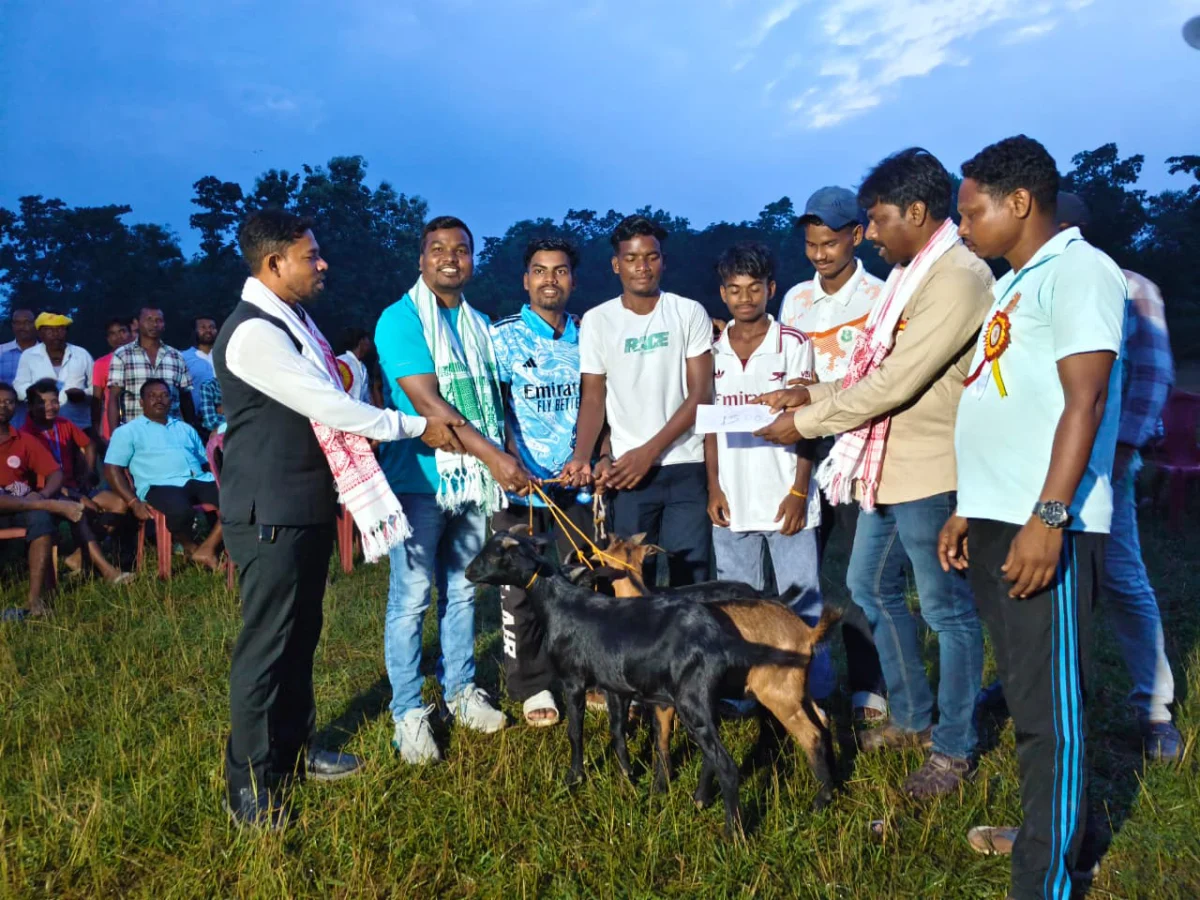
In this year’s tournament, the champions, NCS Maudi, not only secured a cash prize of 15,000 Indian rupees (approximately $156) but also took home three male khassi goats. The runners-up, Kumbaram, received 12,000 rupees ($125) and two khassis. Teams finishing third and fourth, Kobra FC Nimdhi and Galubasa FC respectively, were awarded 9,000 rupees ($93) and one khassi each. While individual accolades like "man of the match" and "best goalkeeper" came with cash rewards, the ultimate glory, and a taste of local tradition, lay with the khassi.
Sachin Devam, captain of the winning team NCS Maudi, expressed his team’s elation. His squad, having traveled on motorcycles to the venue, faced the logistical challenge of transporting their three prize goats back to their village, located 10 kilometers away. "It’s the first win for our team, and we are going to celebrate it with everyone in the village," Devam said, beaming. "It’s going to be a khassi picnic." This sentiment highlights how the goats are not just prizes but catalysts for broader community celebrations.

A Cultural Cornerstone: The Significance of Khassi
Manish Kudada, an 18-year-old player and tournament organizer from Tirilbasa, explained the deep cultural significance of the khassi. "Khassis are part of the prize as they are an important part of our culture. Their meat is tasty, and everyone loves good mutton," he told Al Jazeera. "Most teams slaughter the goats, but some also keep them as livestock and trophy prize." This dual role—as a culinary delicacy and a symbol of achievement—underscores their value.
The khassi goats are particularly prized for their meat quality. In Chaibasa, these animals are a common sight, especially during the bustling weekly Tuesday markets, where a young goat can fetch up to 8,000 rupees ($83). For the Ho community, the absence of khassi meat from a celebration can be deeply disappointing. "Without khassi, our celebrations are half-hearted. At weddings, even if the hosts serve double the amount of chicken and no khassi meat, it will upset the villagers," stated Raj Keshri, goalkeeper for the Tirilbasa team and a tournament organizer. This underscores the organizers’ intention: "Players get to keep their money, but with the khassis, they also get to celebrate the victory with the entire village."
Unique Rules for an Inclusive Game
The Rangila Star Tirilbasa tournament also incorporates modified rules to foster inclusivity and community spirit. Operating under the "ek munda" (one village) system, teams are composed of players primarily from the same village. The standard eleven-a-side format is adapted to nine players per team, with a stipulation that at least six players must hail from the same village, ensuring a strong local representation and reinforcing communal unity.
Further adaptations to the game include the removal of the offside rule, allowing players to score from anywhere on the field. These adjustments create a more accessible and dynamic playing environment. "This kind of match setup provides an opportunity for players like us from small villages who never get a chance to qualify in open tournaments which are dominated by seasoned players," commented Sudarshan Tiu, a player for Galubasa FC.

The Resurgence of Chaibasa: From Insurgency to Sporting Hub
The emergence of footballing talent and vibrant local tournaments in Chaibasa is part of a larger narrative of the region’s recent transformation. Historically, Chaibasa, situated amidst remote forests and hills, was significantly impacted by a prolonged Maoist insurgency. The tribal-led armed revolt, stemming from grievances over deforestation and land alienation for corporate mining, had isolated the district. For years, movement within and out of Chaibasa was restricted, with commercial buses operating only during daylight hours. The area remained on the government’s list of "sensitive areas."
However, a significant shift occurred in 2011 when the government regained control from Maoist forces. The subsequent years witnessed a gradual return to normalcy, further bolstered by the government’s declaration in March of this year that the armed Maoist rebellion had effectively ended in Jharkhand and surrounding states. This pacification has paved the way for development and a burgeoning economic landscape, with new businesses and infrastructure appearing in Chaibasa.
Amidst this resurgence, sporting activities have flourished. Chaibasa is rapidly becoming a notable football hot spot. The state of Jharkhand itself has a strong sporting legacy, having produced world-class field hockey players and athletes, including former Indian cricket captain Mahendra Singh Dhoni. The government actively supports local sports clubs, like Rangila Star, through financial grants, nurturing the next generation of athletes.
Grassroots Football Inspiring New Generations
The impact of these grassroots tournaments extends beyond the immediate participants. Malati Munda, a talented female midfielder and forward from Chaibasa, gained national recognition through local competitions. Her journey led her to play in league matches in Kolkata and eventually secure a position with the Home Guard paramilitary in Ranchi, a common path for players from economically disadvantaged backgrounds seeking stable government employment. Munda herself recalls winning cash and, yes, khassi prizes at such games, underscoring the tournament’s continued relevance and appeal.

The burgeoning football scene has also spawned new avenues for engagement, such as digital content creation. Harish Hembram, a football content creator from Chaibasa, built a substantial following on YouTube by covering local matches. His channel, boasting over 211,000 subscribers, livestreams key games across Jharkhand, earning him a monthly income and enabling him to open a sports shop in Ranchi. Hembram’s success story exemplifies how local football is creating economic opportunities and promoting the sport at a broader level.
A Subculture of Passionate Play
Sandeep Menon, author of "Sacred Grounds: A Journey Through People’s Football in India," highlights that while India may not be a global football powerhouse, the passion for the sport at the grassroots level is "unparalleled." He observes that the game is adapted to local conditions, including space availability, geography, weather, and social contexts. Hyper-local tournaments like Rangila Star Tirilbasa are crucial for nurturing young talent and fostering a deep emotional investment in representing one’s village. For many, football becomes more than just a game; it transforms into an identity and a source of immense pride.
The Rangila Star Tirilbasa tournament, with its unique blend of competitive football and deeply ingrained cultural practices, stands as a testament to the vibrant and diverse sporting landscape of rural India. The roar of the crowd, the lyrical commentary, the strategic plays, and the ultimate reward of a prized khassi goat all contribute to a celebration of community, tradition, and the enduring spirit of the beautiful game.